Welcome to California Green Energy, your trusted partner in reducing electric bills and promoting clean, renewable energy solutions for homeowners in California.
We focus on energy-efficient upgrades such as HVAC systems, windows, roofs, and solar installation, utilize federal and state incentives, and offer affordable financing options to meet your home improvement needs.
Overview of HVAC installation and its importance in California
Regarding home energy efficiency, one of the critical components is the HVAC (Heating, Ventilation, and Air Conditioning) system. In California, where extreme weather conditions are prevalent throughout the year, a properly functioning HVAC system is crucial for maintaining indoor comfort and reducing energy consumption.
Benefits of hiring California Green Energy for HVAC installation
1. Expertise and Experience: At California Green Energy, we have a team of trained and experienced professionals who specialize in HVAC installation. We stay up-to-date with industry trends and technologies, ensuring our customers receive the highest service and efficiency.
2. Cost Savings: Investing in a high-efficiency HVAC system can lead to significant long-term cost savings. Our team can help you select the right system that fits your budget and maximizes energy savings, reducing your monthly utility bills.
3. State and Federal Incentives: We are well-versed in the various state and federal incentives for energy-efficient upgrades, including HVAC installation. Our experts will guide you through accessing these incentives, ensuring you make the most of the financial benefits available.
4. Environmental Impact: By upgrading to a high-efficiency HVAC system, you are saving on energy costs and reducing your carbon footprint. California Green Energy is committed to promoting cleaner and more sustainable energy solutions, contributing to a greener future for our state.
5. Trust and Reliability: Allowing contractors into your home requires trust. That is why we work with local, trusted, clean energy contractors with a proven track record of delivering top-notch service. We aim to provide you peace of mind throughout the installation process and ensure you are satisfied with the results.
Understanding HVAC Systems
Types of HVAC systems used in residential and commercial settings
Different types of standard HVAC systems are used in residential and commercial settings. These include:
- Split systems: Split systems consist of indoor and outdoor units. The indoor unit contains the evaporator coil and the blower, while the outdoor unit contains the condenser and compressor. Split systems are commonly used in homes and small commercial buildings.
- Packaged systems: Unlike split systems, all components are housed in a single unit, typically installed on the ground or roof. This makes them an ideal choice for commercial buildings and larger homes.
- Ductless mini-split systems: Ductless mini-split systems are similar to split systems but do not require ductwork to distribute air. Instead, we use individual air handlers installed in each room. This type of system is often used in homes or buildings where duct installation is not feasible.
Components of an HVAC system
Regardless of the type of HVAC system, several critical components are integral to its functioning. These components include:
- The thermostat allows the user to control the temperature and settings of the HVAC system. It can be programmed to maintain specific temperature levels throughout the day, providing energy savings.
- Furnace or heat pump: The furnace or heat pump is responsible for heating the air in the HVAC system. Furnaces use natural gas or oil to generate heat, while heat pumps extract heat from the air or ground.
- Air conditioner: The air conditioner is the component of the HVAC system that cools the air. It removes heat from the indoor air and transfers it outside, resulting in lower indoor temperatures.
- Air ducts: Air ducts distribute conditioned air throughout a building. We consist of tubes carrying air from the HVAC system to various rooms.
Choosing the Right HVAC System
Factors to consider when selecting an HVAC system for your property
When choosing the right HVAC system for your property, several factors must be considered. These include:
- Size of the space: The space that needs heating or cooling is an important consideration when selecting an HVAC system. A system that is too small may struggle to adequately heat or cool the space, while a too large system may lead to excessive energy consumption.
- Energy efficiency: Energy efficiency is crucial for many homeowners and business owners. Look for systems with a high Seasonal Energy Efficiency Ratio (SEER) rating. A higher SEER rating indicates a more energy-efficient system, which can result in significant cost savings over time.
- Climate considerations: The climate in which your property is located can impact the type of HVAC system that is most suitable. For example, a system with a higher cooling capacity may be more critical if you live in a region with hot summers and mild winters. On the other hand, if you live in a colder climate, a system with a higher heating capacity may be a better choice.
Energy efficiency ratings and SEER values are explained.
When comparing HVAC systems, it’s essential to understand the energy efficiency ratings and SEER values. The SEER rating, or Seasonal Energy Efficiency Ratio, measures the cooling output of an air conditioner or heat pump during a typical cooling season divided by the energy it consumes. The higher the SEER rating, the more energy-efficient the system is.
HVAC Installation Process
Step-by-step guide to the HVAC installation process
When it comes to installing HVAC systems, there is a detailed process that needs to be followed to ensure a successful and efficient installation. Here is a step-by-step guide to the HVAC installation process:
1. Assessment and planning: The first step in the HVAC installation process is to assess the space and determine the heating and cooling needs. This involves measurements, evaluating insulation levels, and considering existing ductwork or infrastructure. Based on this assessment, a plan is developed for the installation.
2. Equipment selection: Once the assessment is complete, the next step is to select the appropriate HVAC equipment for the space. This includes choosing the right size of the system and efficient models that meet the property’s needs. Installation: If the HVAC system requires ductwork, the next step is to install it. This involves designing and fabricating the ducts and then carefully installing them throughout the building. Proper ductwork installation is crucial for efficient airflow and temperature regulation.
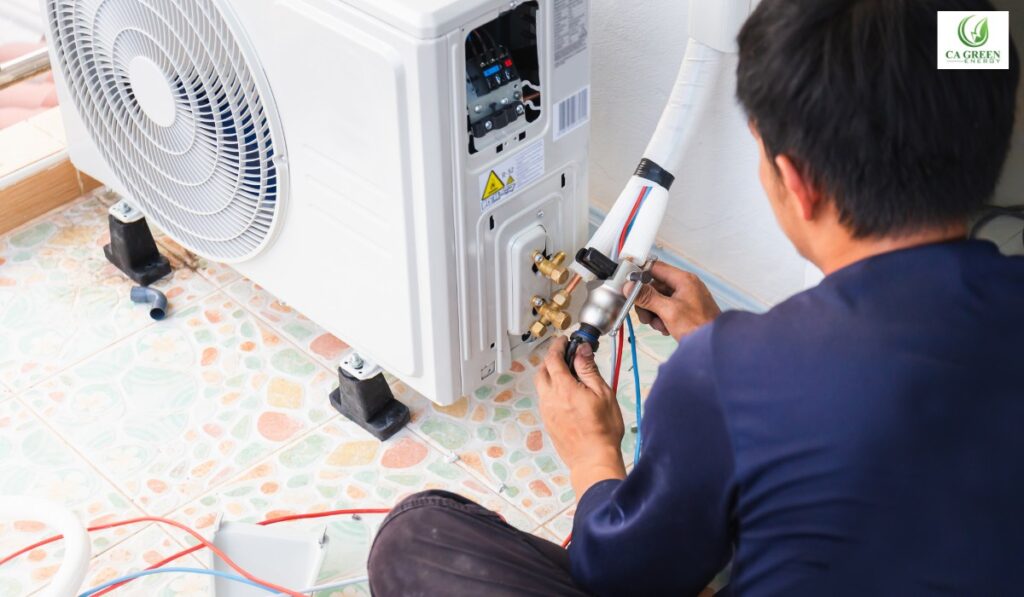
4. Equipment installation: The HVAC equipment is installed once the ductwork is in place. This includes mounting the indoor and outdoor units, connecting refrigerant lines, and electrical wiring. Proper installation techniques ensure that the equipment operates efficiently and safely.
How California Green Energy helps homeowners leverage these incentives
At California Green Energy, we understand the importance of these federal and state incentives in helping homeowners make HVAC installation more affordable. We specialize in assisting homeowners in California in accessing these incentives and maximizing savings. Here’s how we can help:
1. Incentive Guidance: Our team of experts is well-versed in the various federal and state incentives available for HVAC installation. We can guide homeowners through determining eligibility for these incentives and help them understand the requirements and paperwork involved.
2. Financing Options: In addition to incentives, we offer affordable financing options to further assist homeowners in making HVAC installation financially feasible. We work with trusted financial partners to provide competitive rates and flexible payment plans, ensuring homeowners can find a financing option that suits their budget and needs.
3. Partnership with Local Contractors: We have established partnerships with some of California’s best local HVAC contractors. These contractors have extensive experience in HVAC installation and are familiar with the requirements for accessing incentives. Working with trusted contractors ensures the installation is done correctly and complies with all regulations.
Financing Options
Affordable financing solutions for HVAC installation
At California Green Energy, we understand that the upfront cost of HVAC installation can be a significant barrier for homeowners. That’s why we offer a range of affordable financing options to help make your HVAC upgrade more financially feasible.
With our financing solutions, you can get the necessary HVAC system without breaking the bank. Here’s what you need to know about our financing options:
Exploring loan programs and payment plans
We work with trusted financial partners to provide competitive rates and flexible payment plans. Our financing options are designed to fit your budget and meet your specific needs. Here are some of the loan programs and payment plans we offer:
1. Low-interest loans: We have access to low-interest loan programs that can help spread out the cost of HVAC installation over a more extended period. These loans come with attractive interest rates, making them an affordable option for homeowners.
2. Deferred payment plans: We offer deferred payment plans for homeowners who prefer to delay payments. With this option, you can install your HVAC system and start making payments later, giving you more time to budget and plan your upgrade.
3. Personal loans: We also offer personal loans tailored to HVAC installation. These loans have flexible terms and competitive interest rates, making them a convenient and affordable option for homeowners.
4. Energy-efficient financing programs: Some programs are designed explicitly for energy-efficient upgrades, including HVAC systems. These programs may offer incentives such as lower interest rates or extended repayment terms for homeowners who choose energy-efficient options.